How to Use the NBA Injury Report to Gain a Betting Edge
 Available in US
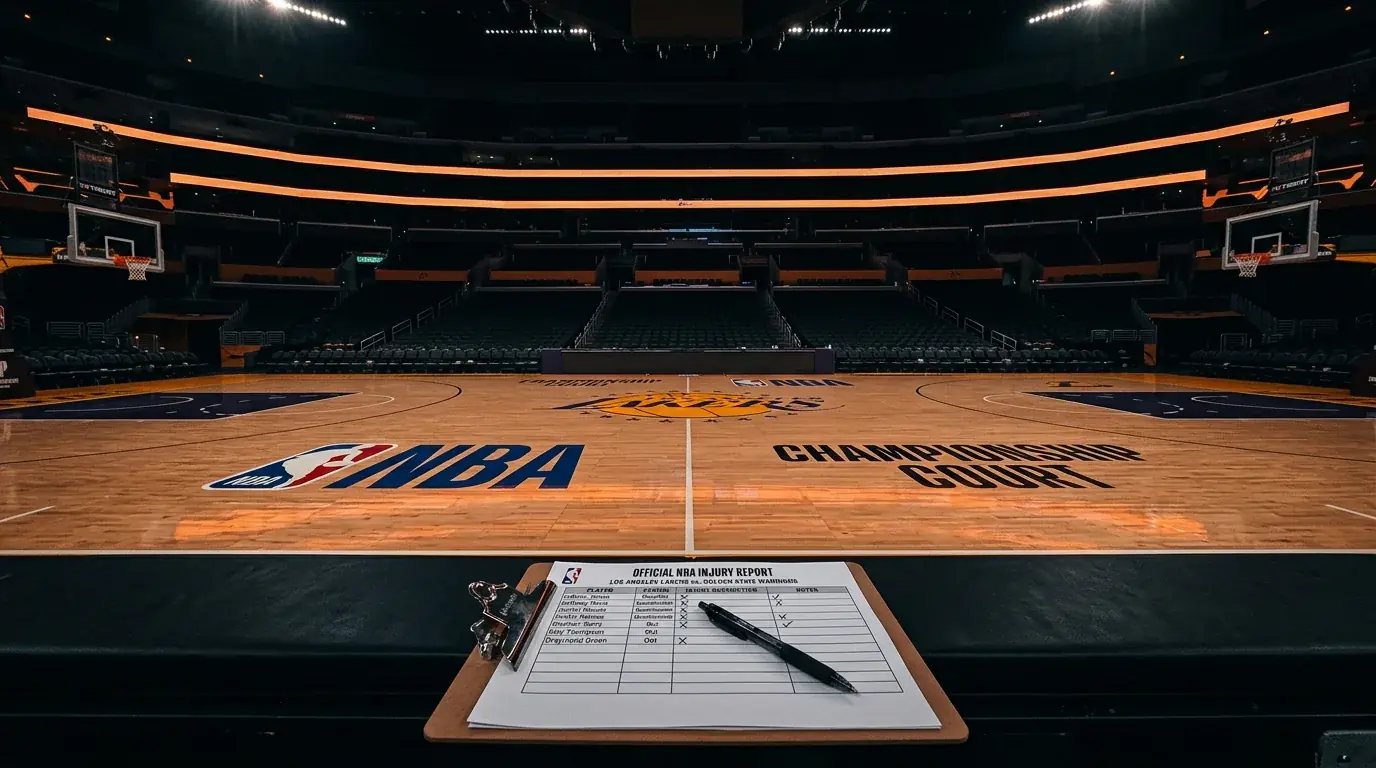
The single most profitable bet I ever placed came not from a complex statistical model or weeks of research. It came from checking the NBA injury report at 6:30 in the evening and noticing something the market had not yet priced in. A key rotation player had been quietly downgraded from “questionable” to “out” — and the line had not moved yet. I got my bet on at a price that was gone within twenty minutes. That is the injury report edge in its purest form.
Most UK punters treat the injury report as a news item to read after they have already decided what to bet. That is backwards. The injury report is a live market signal, and the window between when information becomes public and when bookmakers adjust their lines is where the real opportunity lives.
How NBA Injury Report Timing Actually Works
Here is something that surprised me when I first started paying close attention: the NBA’s official injury report is published in two waves. The first comes roughly two hours before tip-off, listing players as “probable,” “questionable,” or “doubtful.” The second and definitive version drops approximately one hour before the game and includes “out” designations. This second wave is where the sharpest line movements happen.
Between those two publications, bookmakers are operating with the same incomplete information you are. Their traders are watching the same feeds. The difference is volume — a large UK bookmaker might have dozens of traders monitoring hundreds of markets simultaneously. That creates lag. Not much lag, maybe five to fifteen minutes on a significant injury update, but enough for a prepared bettor to act.
The practical workflow is this: know when your target game reports are due, check them the moment they drop, and have your bet sized and ready to place. Hesitation kills the edge. If you spend three minutes debating the decision after seeing the news, the line has already moved.
It is also worth noting that the injury report is publicly available through the NBA’s official channels, and every major sports data service distributes it in real time. You do not need a subscription or a proprietary tool — you need to be watching at the right moment and know what you are looking for.
Star Players vs Role Players: The Market Gets This Wrong
I used to assume that star player injuries created the biggest edges. Experience taught me the opposite is often true. When a team’s leading scorer is ruled out, the entire sports media ecosystem reports it within seconds. Every bettor, every odds compiler, every trading algorithm is watching that news simultaneously. The line adjusts almost instantaneously. By the time you read about it on a mainstream sports site, the value is gone.
Role players are different. The market systematically undervalues the impact of a key bench contributor going out, particularly in specific matchup contexts. Consider a team’s starting point guard who comes off the bench ranked second in assists — his absence affects the offensive rhythm in ways that do not show up in his scoring line, and bookmakers tend to under-adjust because their models are calibrated primarily on the metrics that generate headlines.
The pattern I have found most reliable is the “glue guy” absence — a defender who guards the opponent’s best perimeter player, or a big who provides rim protection without posting big numbers. When that player is out, the team’s defensive performance drops measurably, but the line barely moves because the analytics are not obvious to a casual observer. That asymmetry is where the injury report consistently creates pricing errors.
The other scenario worth tracking is when a player who is listed as “probable” or “questionable” has been managing a chronic issue. Bookmakers price the line with the assumption that “probable” means a 75% chance of playing — historically, that is roughly accurate across the full season. But in specific contexts — back-to-back nights, long road trips, or games with low playoff implications — coaches rest those players at a much higher rate than the average suggests. If you know the team, the situation, and the coach’s tendencies, you can often anticipate a DNP before it is confirmed.
How Injuries Shift Game Totals
Point spreads attract most of the attention when injury news breaks, but game totals react in ways that are often more predictable and slightly slower to adjust. This matters because totals markets tend to be somewhat less efficient than spreads — there is less sharp money concentrated there, and bookmakers are a touch more conservative in their adjustments.
When a high-usage offensive player is ruled out, the immediate effect is a drop in the team’s expected possessions and scoring rate. A player who averages 28 points and takes 20 shots per game is not simply replaced by the next player on the roster averaging the same output — the team’s entire offensive structure changes. Usage redistributes, pace sometimes slows as the team becomes more cautious, and the total market needs to reflect all of that.
The complication is opponent adjustment. If a team’s defensive stopper goes out, the opposing team’s best scorer suddenly faces a weaker matchup, which pushes the total in the other direction. I have seen games where two simultaneous injury updates pushed the total in opposite directions, leaving the line almost unchanged — but the composition of the game changed dramatically. In those situations, the props markets become far more interesting than the game total itself.
A useful heuristic I apply: if an injury affects a player whose primary contribution is defensive rather than offensive, check the opposing team’s leading scorer’s points prop immediately. Those markets react more slowly than the game spread, and the implied output for the opposing star often lags behind what the new matchup reality suggests.
Basketball’s pace-dependent scoring also means that injuries to facilitators — playmakers who drive tempo — affect totals disproportionately. When a team’s primary ball-handler sits out, the pace of play drops noticeably in many rosters, and a slower game means fewer possessions and fewer scoring opportunities for both teams. Over the course of nine years watching this, I would estimate that the market under-prices the pace effect of facilitator absences by somewhere between half a point and a full point on totals, on average — small, but meaningful if you are betting consistently.
One final thought on totals and injuries: the “over” bias in public betting means that recreational bettors disproportionately back overs. When an injury should rationally push the total down, the market sometimes corrects slowly because public money is still flowing toward the over out of habit. That creates a window to get on unders at prices that have not yet fully reflected the new reality. It is not a guaranteed edge — nothing is — but it is a recurring pattern worth tracking.
If you want to sharpen your reading of these situations within the broader context of how props lines are constructed and where bookmakers are most vulnerable, the analysis in NBA player props strategy covers the mechanics in detail and is worth reading alongside your injury report workflow.
When is the best time to place a bet after an NBA injury report?
The optimal window is immediately after the definitive injury report drops — roughly one hour before tip-off. This is when ‘out’ designations are confirmed and before bookmakers have fully adjusted their lines. The gap is typically five to fifteen minutes on significant updates. Acting within that window requires having your stake decision made in advance, so you are not deliberating while the price moves.
How much does a star player’s injury typically move the spread?
A top-tier star — a team’s leading scorer averaging 25-plus points — can move a spread by two to four points depending on the matchup context and the depth of the roster. However, because star injuries are reported and priced almost instantly, that movement happens before most bettors can act. The more actionable edge lies with role players and defensive specialists, where the market is slower to adjust and the movement is typically half a point to one and a half points.
Written by the editors at Basketball Betting Strategies.