Basketball Betting Mistakes to Avoid: Why Most UK Punters Lose (and How Not To)
 Available in US

My third season betting basketball seriously, I hit a run of seven consecutive losing weeks. My picks were not dramatically worse than usual — the win rate had dipped slightly but nothing catastrophic. What caused the damage was what I did in response: I doubled stakes twice, bet on games I had not properly researched to “make the money back faster,” and stopped tracking my results because looking at the spreadsheet felt too painful. By the time I came back to sensible sizing, I had turned a manageable drawdown into a genuine crisis. Every single mistake I made during that stretch is on this list. I know exactly what these errors cost because I have lived them.
The consistent finding from Gambling Commission research is that the vast majority of industry revenue comes from a small minority of customers — with around 60% of gross yield generated by roughly 5% of gamblers who are either problem bettors or high-risk players. The errors below are not accidental features of recreational betting. They are the structural reasons why the industry is profitable. Understanding them is the first step to not funding it personally.
The Eight Mistakes That Drain Bankrolls
Overstaking is where most bankrolls end. Not bad picks, not bad luck — overstaking relative to edge. Betting 10-15% of your total bankroll on a single NBA game, regardless of how confident you feel, exposes you to ruin-level variance. A perfectly competent bettor with a genuine edge can lose eight or nine bets in a row simply through statistical variance. If each of those bets is 10% of the bankroll, you have a problem. If each bet is 1-2%, the losing run is painful but survivable. This is the foundational error — everything else compounds on top of it.
Chasing losses is overstaking’s inevitable companion. The losing run happens, the emotional response is to “get it back,” and the mechanism is increasing stakes on the next bet. The psychological logic feels compelling in the moment: a bigger win will restore the position faster. The mathematical reality is that a larger stake increases variance without improving the underlying edge, meaning you are simply amplifying the problem that already exists. The only rational response to a losing run is to do nothing different — same process, same sizing, same discipline. This is genuinely difficult and most people cannot manage it without structural safeguards (fixed unit sizes, written-down staking rules, accountability to another person).
Fan bias is the mistake I encounter most often among newer bettors. Supporting a team and betting on them are activities that contaminate each other. If you are an NBA fan with allegiances, you systematically over-estimate the probability of your team winning and under-estimate their opponents. You focus on their strengths and the opponent’s weaknesses. You remember their good results more vividly than their bad ones. The cure is simple: never bet on your own team unless you have specifically stress-tested your reasoning by arguing the other side of the bet as thoroughly as possible — and preferably not then either.
Ignoring line movement is a mistake that costs money in a different way. When a line moves significantly from its opening position, it is communicating something. Sharp money, injury news, or correlated market moves are the usual drivers. A bettor who locks in a pre-game assessment and ignores what the market tells them subsequently is leaving free information on the table. You do not need to change your bet every time the line moves — sometimes your original read is correct and the movement is noise. But systematically ignoring line movement as an input means you are betting with less information than you could have.
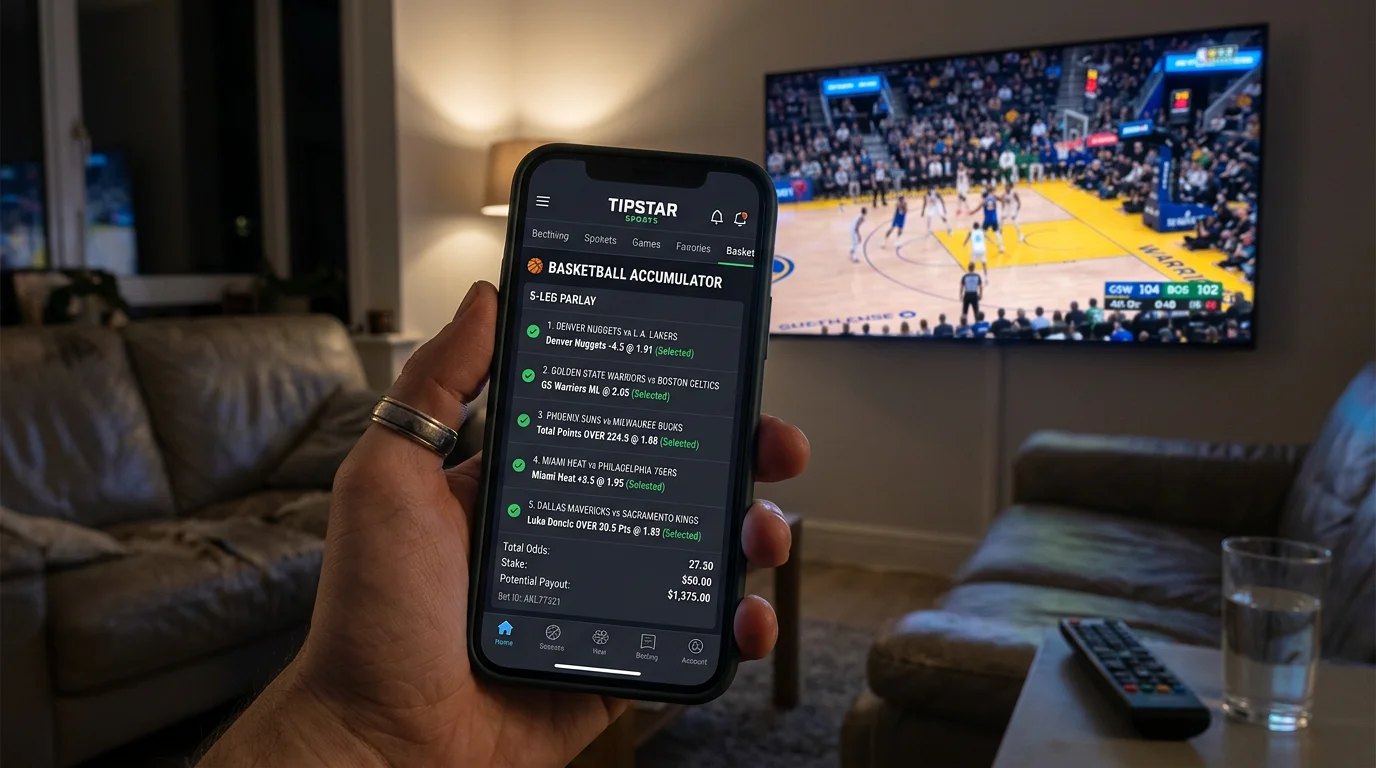
Betting too many games per week is the volume trap. There are 1,230 NBA regular-season games across the full season. On any given night in January there might be twelve or thirteen games available to bet. Having genuine edges in all of them simultaneously is not plausible. The bettors who bet five or more games per night are almost always chasing action rather than betting edge — and the difference in outcome between the two is enormous over a season-long sample. My own practice is to pass on most nights entirely and bet one or two games when I have a specific, researched position. Boredom and the desire to be involved are powerful psychological forces that work directly against profitability.
Not tracking results is both a symptom of other problems and a cause. When you do not track precisely what you bet, at what odds, for what stakes, and what the outcome was, you cannot identify which of your approaches is working and which is leaking money. You also lose the ability to distinguish between a genuine skill edge and variance-driven luck. Bettors who do not track tend to remember their wins more vividly than their losses (selective memory is universal) and systematically over-estimate their performance. The tracking spreadsheet is not optional; it is the evidence base for everything you think you know about your own betting.
Ignoring the closing line is a more sophisticated version of the same problem. The closing line is the market’s best estimate of the true probability of an outcome. If you are consistently getting better prices than the closing line — what is called positive closing line value — you have a genuine edge, even in periods when your results are running cold. If you are consistently getting worse prices than the closing line, you are betting on the wrong side of the market’s collective wisdom, regardless of how many bets you are winning in the short term. Tracking your CLV alongside your results separates skill from luck more cleanly than win rate alone.
Treating NBA betting as entertainment budget, not investment, is the final category — and it is the most philosophically significant. Recreational bettors who stake more than they can genuinely afford to lose, and who use betting as an emotional outlet rather than a calculated pursuit of edge, are setting up the conditions for the worst outcomes. Andrew Rhodes, the Gambling Commission’s chief executive, has described the survey work underpinning UK gambling research as building the evidence base to understand “both gambling behaviour and potential consequences.” The consequences for bettors who have not separated entertainment from investment are well-documented. This is not moralising — it is a risk assessment that belongs in any honest discussion of how to approach this activity.
The Cognitive Biases Behind the Errors
Most of the mistakes above have a cognitive bias at their root. Anchoring (the recent high-scoring game makes you over-bet totals) and recency bias (the team just won three straight, so you ignore the back-to-back schedule data) are the two most common. Recency bias is particularly insidious in basketball because of how rapidly team performance can fluctuate across a long season — a four-game winning streak on a soft schedule tells you almost nothing about the next ten games.
Sunk cost thinking shows up most powerfully in live betting and futures. The decision to cash out a futures bet, or to add to a losing live position, should be driven entirely by current probability and current price — not by what you originally paid for the bet. What you paid is gone; what matters is the expected value of the decision in front of you right now. I have held futures positions longer than I should because letting go felt like admitting a mistake. It is not. It is just rational probability assessment.
Practical Fixes That Actually Work
Written rules for sizing — a fixed percentage of bankroll per bet that you do not deviate from — remove the in-the-moment discretion that leads to overstaking and chasing. If you decide in advance that your maximum single bet is 2% of bankroll and you have written that down somewhere, it becomes much harder to justify breaking the rule when the emotional pressure to do so peaks.
A “24-hour rule” on new bet types is worth adopting: if you are considering a market or approach you have not previously bet, wait 24 hours before placing the first bet. This is not about being slow — it is about ensuring the decision is deliberate rather than impulsive. Most impulse bets in unfamiliar markets are losing bets.
A hard limit on games per week — I use four as my personal ceiling during the regular season — keeps volume honest. If you have researched five games and genuinely believe all five have edge, pick the four where the edge is clearest. The constraint forces prioritisation and the prioritisation improves the quality of what you actually bet.
If the structural side of bankroll management interests you — the mathematics of sizing, the Kelly Criterion, and the tools that make these habits sustainable over a full season — basketball bankroll management covers the mechanics in the detail they deserve.
What is the biggest single mistake basketball bettors make?
Overstaking — betting a percentage of bankroll per game that is too large to survive normal variance. Most recreational bettors significantly underestimate how many consecutive losses are statistically plausible even with a genuine edge. A 2% per-game stake means you need to lose 50 consecutive bets to lose your entire bankroll — which is essentially impossible. A 15% per-game stake means seven consecutive losses wipes you out, which is entirely plausible across a full season even with good selections.
How do I stop chasing losses in NBA betting?
The most effective mechanism is structural: decide your stake size and your weekly game limit in advance and write them down as fixed rules. When you are in a losing run, the emotional pressure to deviate from those rules is highest — which is exactly when having them written down matters most. Some bettors also find accountability useful: sharing results weekly with another disciplined bettor creates social pressure that reinforces the written rules during the difficult periods.
Prepared by the Basketball Betting Strategies editorial staff.