NBA Back-to-Back Betting Strategy: Turning the Schedule Into an Edge
 Available in US
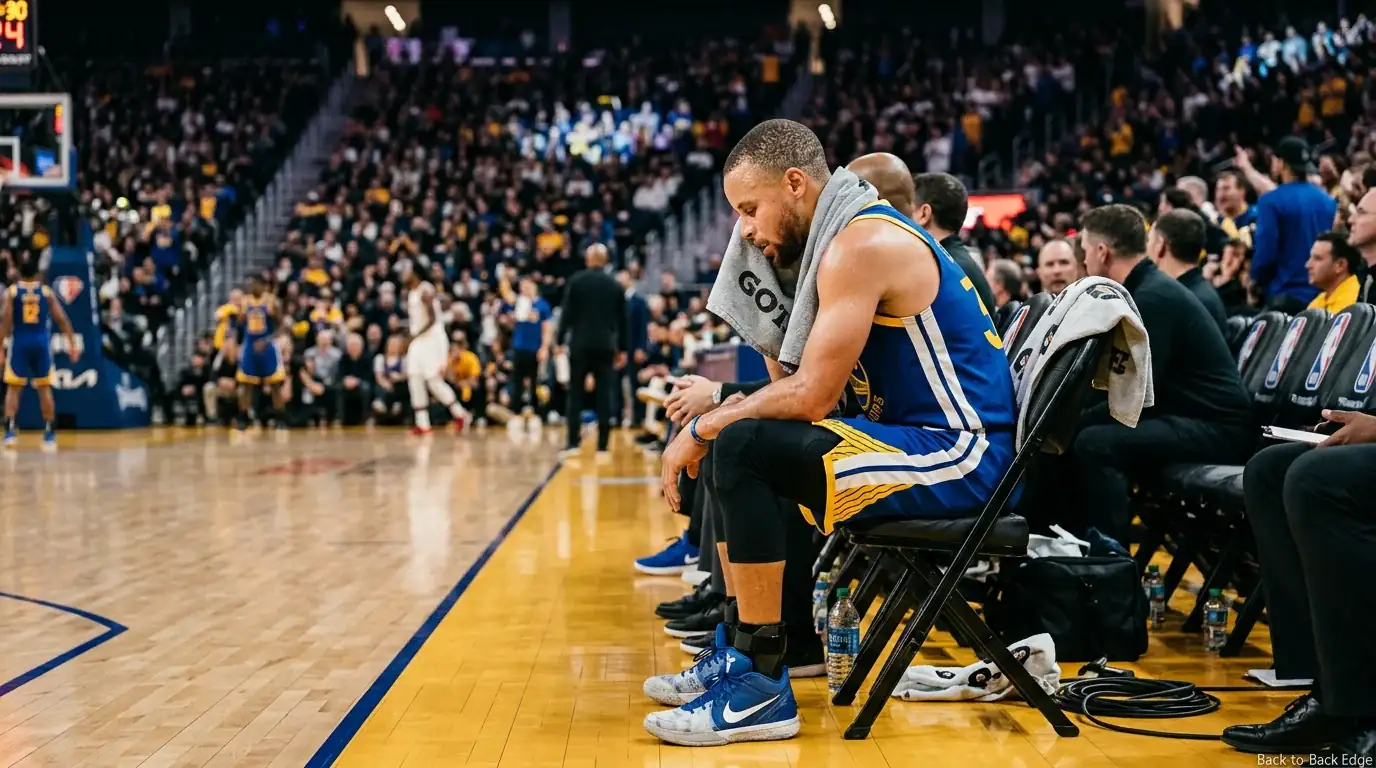
Every NBA punter has heard the theory: teams playing the second game of a back-to-back are tired, so bet against them. It sounds compelling. It is the kind of common-sense logic that spreads through betting communities because it sounds right. The problem is that common-sense logic in betting is almost always already priced in. Everyone knows about back-to-backs. The bookmakers know. The sharps know. The question is not whether fatigue exists — it does — but whether the market is mispricing it in ways you can actually exploit.
The specific ATS number is 49.3%. Since 2005, teams playing the second game of a back-to-back have covered the spread in 49.3% of regular season games — a record of 2,058-2,118. That is barely below breakeven, which tells you the market is broadly correct about back-to-back disadvantage. But inside that aggregate number are specific subsets where the market is consistently wrong, and those subsets are where the real edge lives. This article is about finding those subsets and knowing when to act on them.
I want to be upfront about what this strategy requires: consistency and a systematic approach. The punters who profit from back-to-back situations are not the ones who occasionally remember that a team played yesterday — they are the ones who have their seasonal schedule tracked before October tips off and check it every single day. The data advantage is free. The discipline to use it is not automatic.
The Back-to-Back Problem: What the Data Actually Shows
I want to start with the number most people cite and work outward from there, because the aggregate data is genuinely less interesting than what sits underneath it. Teams on back-to-backs going 49.3% ATS tells you the market is fairly calibrated on average. It does not tell you anything about which specific configurations within back-to-backs are mispriced.
The configuration that produces the most reliable edge — and this is the one I have built a consistent filter around — involves the intersection of back-to-back status and public betting percentage. Specifically: when a home team playing the second game of a back-to-back is receiving 65% or more of public betting tickets, they cover the spread just 42% of the time. Flip the perspective: betting against those teams produces a 58% win rate. Over 200 games sampled, that is not noise — that is a systematic overpayment by the public for the home court advantage of a fatigued team.
Why does this happen? The public loves home teams. Home court advantage is a real factor, and it is emotionally satisfying to back the home side. But the public’s attachment to home teams persists even when the specific game context — a tired roster on the second night of a back-to-back — should logically reduce the edge. The bookmaker, knowing public money will flow to the home team regardless, prices the spread aggressively. When the public then heavily backs that home team anyway, the line has been set to extract maximum margin from a public that is not doing the situational analysis.
The home team back-to-back situation is where I look first on any given day’s NBA slate. The research required is minimal: check the schedule, identify which teams are on the second game of a back-to-back, then check the public betting percentages. If a back-to-back home team is over 65% public action, that game goes on a shortlist for further analysis. I do not bet it automatically — other factors matter — but it earns a closer look every time.
The overlap between back-to-back scheduling and home court pricing is significant enough that the home court advantage in NBA betting guide addresses the combined effect in depth — particularly how the market’s tendency to overvalue home court on general principle compounds with back-to-back mispricing to create some of the most reliable situational edges in the regular season.
Road Teams on Back-to-Backs: The Counter-Intuitive Edge
Here is the part that surprises most punters when they first hear it: road teams on back-to-backs, early in the season, have historically outperformed expectations against the spread in a meaningful way. It runs directly against intuition — a fatigued team, playing away from home, in the second game of two consecutive nights. Every factor suggests they should underperform. And yet the data says otherwise for a specific configuration.
Road teams on back-to-backs during the early season — specifically games 2 through 12 of a team’s schedule — went 235-172-5 ATS since 2004, a cover rate of 57.7%. A hypothetical bettor placing flat stakes on every such game returned a profit of over five thousand pounds per hundred pounds staked across that sample. That is a genuine edge, sustained over multiple seasons and a meaningful sample of games.
The explanation lies in how the market processes early-season back-to-backs compared to mid-season ones. Early in the year, teams are fresh — the back-to-back fatigue is real but less severe than it becomes in February or March when accumulation sets in. The bookmaker, however, applies the same broad pricing discount to back-to-back road teams regardless of where in the season the games fall. The result is that early-season road teams on back-to-backs are systematically underpriced relative to their actual diminished-but-not-as-diminished-as-assumed quality.
By mid-season, the opposite tends to be true. Teams that have played 40+ games with heavy back-to-back scheduling genuinely accumulate fatigue in ways that go beyond what a single night’s rest can solve. The market, which has now had two months of data on each team’s performance in these situations, adjusts more accurately. The edge compresses. This is why the early-season filter is so important: the same strategic logic applied indiscriminately across the whole season produces worse results than applied selectively in October and November.
A practical note on sourcing this data as a UK bettor: the NBA official website publishes full schedules well before the season starts, and back-to-back games are easily identifiable in list format. Setting up a simple tracker at the beginning of each season — listing every team’s back-to-back dates and whether they are home or away for the second game — takes less than an hour and pays dividends across the full regular season. The information is public; the discipline to use it systematically is what separates bettors who exploit it from those who just know about it theoretically.
I want to add one nuance to the early-season framing: the edge in road back-to-back teams compresses significantly after the first month. By game 20, the bookmakers have observed the same pattern repeating across the industry and their models adjust. This is not unique to back-to-back betting — it is how all situational edges in sports betting work. They exist because of an information lag, and they diminish as that lag closes. The window here is genuinely early, and acting in October is materially different from acting in December with the same strategy.
Load Management as a Schedule Variable
The rise of load management has complicated back-to-back analysis in ways that did not exist a decade ago. When a team’s star player is held out of the second game of a back-to-back for “rest reasons,” the entire premise of the bet shifts. You were expecting a fatigued team that still had their best player available. What you get is a fatigued team without their best player — a materially different situation that the original spread may or may not reflect accurately.
The challenge with load management is timing. NBA teams are not required to announce rest decisions far in advance, and in practice, many rest decisions are made on the day of the game or the morning before. UK bettors face a particular disadvantage here: if a game tips off at 1am UK time and the rest announcement comes at 7pm Eastern (midnight UK), anyone who placed their bet before midnight is holding a position in a game that has fundamentally changed. The spread will move after the announcement, but you will not benefit from that movement.
There are two practical responses to this. The first is to wait — place bets on back-to-back games as late as possible before tip-off, giving you the maximum window to incorporate any injury and rest news. The second is to explicitly factor load management risk into which back-to-back situations you bet. Teams with a demonstrated pattern of resting players on back-to-backs in the past are higher risk for this than teams whose coaching staff historically plays their starters regardless of scheduling.
When load management information is publicly known in advance — and sometimes teams do announce planned rest days a game ahead — the market typically adjusts the spread by 3-5 points to reflect the missing star. These post-announcement lines are worth examining carefully. If the adjustment feels too large — the star player was averaging 24 points but the line moved 5 points — the line may have overcorrected in the direction of the underdog, creating value on the newly adjusted favourite. If the adjustment feels too small, there may be value on the underdog. Either way, the announcement creates movement and movement creates opportunity.
The broader strategic takeaway on load management: it raises the research bar for back-to-back betting. In an era when load management is a legitimate coaching tool rather than an occasional exception, you cannot take a position on a back-to-back game without having a clear view of each team’s rest policies and the specific health status of their key players on that day. This is additional work. But it is also additional protection against betting on a game where the premise — a fatigued team starting their full rotation — is no longer valid.
Filtering Back-to-Back Spots: A Practical Framework
Nine years of tracking these situations has produced a mental checklist I go through any time a back-to-back situation appears on the slate. I am sharing it as a framework, not a rule set — every situation has context that a checklist cannot fully capture.
The first filter is timing in the season. Early-season back-to-backs (games 1-15) favour the road team as discussed. Mid-season and late-season back-to-backs are more neutrally priced and require additional factors to generate a clear lean. The season-timing filter eliminates roughly a third of all back-to-back situations from consideration as actionable spots.
The second filter is home versus road on the second game. Home teams on back-to-backs with heavy public action are fade candidates; road teams on back-to-backs in the early season are lean candidates for coverage. The combination of these two filters identifies the clearest subset of situations where the market is systematically off.
The third filter is travel. A road team playing the second game of a back-to-back after travelling from the East Coast to the Mountain Time zone is in a materially different situation from a road team whose second game happens to be in a nearby city on the same coast. Time zone crossings accumulate fatigue faster than mere game frequency. Teams that are “West Coast teams playing East” or “East Coast teams on Western swings” show measurable ATS underperformance in back-to-back situations beyond what same-timezone back-to-backs show.
The fourth filter — and this is where I often reject situations that pass the first three — is the specific matchup. If a fatigued road team on a back-to-back is facing the league’s slowest-paced defence, the game structure limits their disadvantage. They will not be running fast breaks against a team that physically prevents transition. A slow, controlled game favours the back-to-back team more than an up-tempo contest where fatigue compounds with every extra possession. Back-to-back spots in up-tempo matchups are more reliable fade situations than back-to-back spots in grind games.
The fifth filter is public betting percentage. Below 55% public action on the back-to-back team, the market has already adjusted significantly and the fade is probably priced in. Above 65% and the public is actively driving the line away from where it should be, creating the premium fade opportunity. Between 55% and 65% is a grey zone where I need additional conviction from the other filters before acting.
When all five filters align — early season, home back-to-back, East-to-West or West-to-East travel on the road opponent, up-tempo matchup structure, and 65%+ public action on the back-to-back team — that is a high-conviction situation. These do not come along every week. Over a full NBA regular season, you might find 15-25 games that satisfy all five conditions. That is not a large sample for any individual season, which is why tracking results across multiple seasons matters more than evaluating any single year’s performance in this strategy.
I also maintain a secondary list of situations that pass three or four filters. These receive smaller stakes and are treated as lower-conviction positions. Some of them are the games where the edge that existed at four filters gets validated or refuted by the fifth, and tracking that data over time is how I refine which filters matter most in the current season’s market conditions.
How to Find and Bet These Spots on UK Bookmakers
The research for back-to-back betting is less complex than most analytical areas of NBA wagering. The schedule is fixed and public. Back-to-back games are easily identifiable. The work is mostly in developing the habit of checking it consistently and maintaining a seasonal tracker.
Start at the beginning of each NBA season by downloading the full schedule and marking every team’s back-to-back dates. Note whether each team is home or away for the second game. This list becomes your reference point throughout the year. Cross-reference it with the slate each day before doing any analysis on specific games.
For public betting percentages, several data platforms aggregate this information. Action Network is the most commonly referenced in North American betting communities, and the data is visible from UK IP addresses. Covers.com provides similar functionality. Neither requires a paid subscription to access basic public betting percentage data.
Once you have identified a back-to-back situation that passes your filters, the practical execution on UK bookmakers is straightforward. The spread market is available on all major UKGC-licensed operators for any NBA game. Check the spread at 2-3 bookmakers and take the best available price — for back-to-back situations where you are fading the public, the public-facing bookmaker sometimes has a slightly worse number than a smaller operator with less volume on that specific game. The half-point difference this creates can be meaningful when games land near the spread number, as they frequently do in these situations.
The in-play market is worth monitoring for back-to-back games even if you have already placed a pre-game bet. Teams on back-to-backs tend to fade in the third quarter more than any other period — the adrenaline of the opening quarter wears off, half-time rest is insufficient, and fatigue compounds. If you are watching a back-to-back game and the team you backed against is up at half-time, the in-play line on the second half can represent additional value in the same direction as your original position.
A note specifically for UK bettors on the timing challenge: most NBA games that feature meaningful back-to-back situations start between 11pm and 3am UK time. If you are serious about betting these markets consistently, you will occasionally need to place bets late at night — or accept that you are betting earlier in the day with incomplete information. My personal approach is to set a threshold: any back-to-back bet I want to place gets finalised no later than 30 minutes before tip-off, using the most up-to-date injury and rest information available. This means some nights I am placing bets at 12:30am. It is a lifestyle consideration that is worth acknowledging honestly before you build this into your regular process.
Back-to-Back Betting: Your Questions Answered
Do NBA teams genuinely underperform ATS on back-to-back nights?
The aggregate data shows back-to-back teams at 49.3% ATS — barely below breakeven — which means the market is broadly correct about back-to-back disadvantage on average. The genuine edge is in specific subsets: home teams receiving heavy public action (65%+) on back-to-backs cover only 42% of the time, and road teams on early-season back-to-backs (games 2-12) cover at 57.7%. Blanket back-to-back fading does not produce a consistent edge; situational filtering does.
Is it always better to bet against the team playing the second game?
No. The correct approach is to assess the specific configuration. Home teams with heavy public action on back-to-backs are reliable fade targets. Road teams in early-season back-to-backs are lean candidates for backing. Mid-season and late-season back-to-backs in either direction require additional situational context to generate a clear position. The aggregate number (49.3%) tells you the overall market is fairly priced — the edge is in the subsets.
How does load management affect back-to-back betting strategy?
Load management introduces timing risk. If a star player is rested after you have already placed your bet, the spread will move to reflect the absence, but your position is locked at the original number. The mitigation is to bet as late as possible before tip-off on back-to-back games, giving yourself the maximum window to incorporate any rest announcements. Factoring in a team’s historical load management behaviour — whether their coaching staff routinely rests players on back-to-backs — helps identify which situations carry the most timing risk.
Which UK bookmakers offer the best NBA in-play markets for back-to-backs?
Most major UKGC-licensed operators offer live spread and total markets for NBA games, though the depth varies. For in-play back-to-back betting specifically, the key features to look for are speed of line update after momentum shifts and availability of second-half markets as standalone bets. Comparing in-play offerings across two or three operators before the season starts — placing small test bets to assess execution speed and line quality — is the most reliable way to identify which platform suits your live betting style.
Prepared by the Basketball Betting Strategies editorial staff.