Basketball Betting Markets: From Moneyline to Player Props
 Available in US
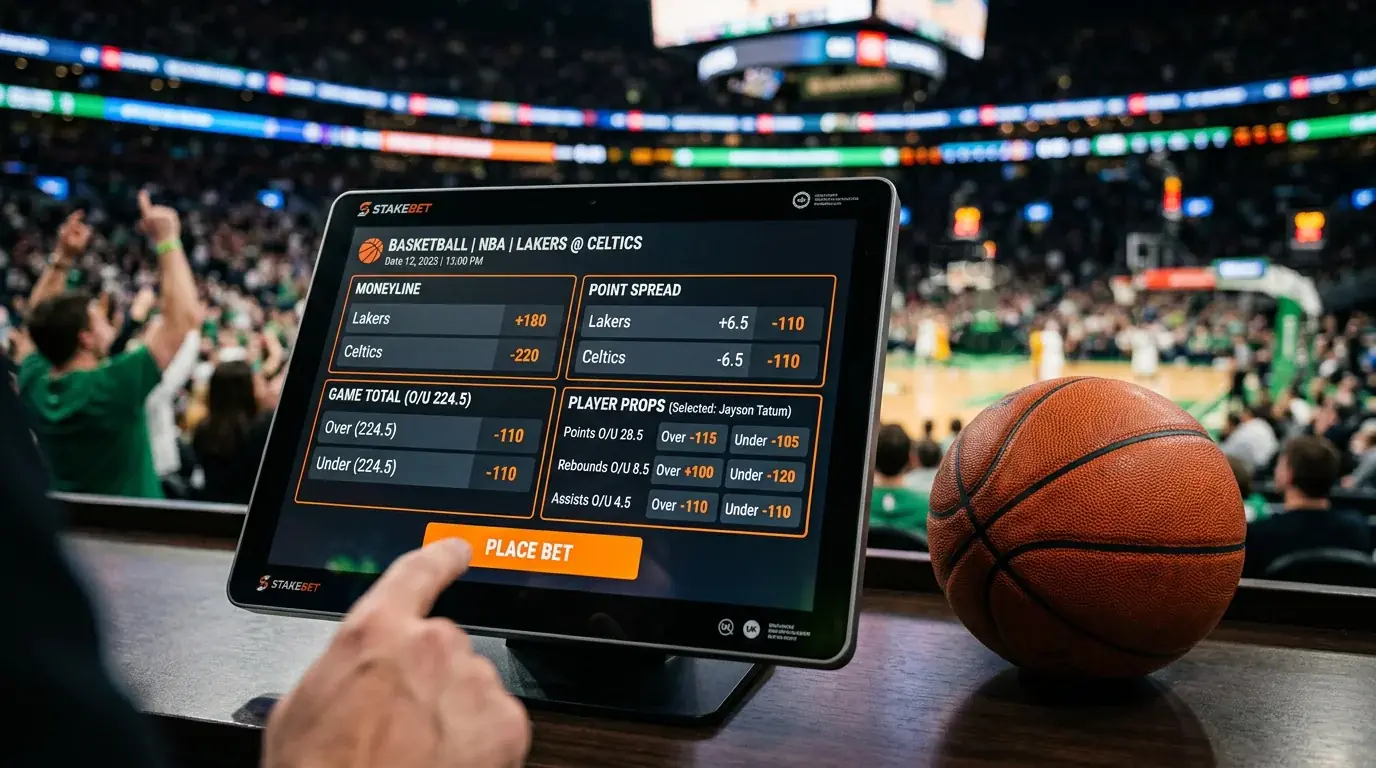
Ask a room full of UK basketball bettors what markets they use regularly and you will hear the same two answers: moneyline and game totals. Maybe point spread from the more experienced crowd. What you almost never hear is player props, futures, or live markets — and that is precisely where the opportunity sits. The markets most punters ignore are the markets where bookmakers dedicate less resource to pricing, which means the lines are softer and the edges last longer.
I spent years playing almost exclusively in the spread and moneyline markets before I was pushed — reluctantly — into player props by a run of absolute nonsense results on games I had analysed correctly but where the margins went wrong. Props took some getting used to. The lines are set differently, the variables are different, and the research process is different. But the returns have been more consistent precisely because fewer sharp eyes are watching those markets.
This guide maps every major basketball betting market available on UK bookmakers — what each one is, how it is priced, and where the strategic edge lives. Think of it as the market overview that should precede any deeper analysis of individual betting types.
Moneyline Betting: Simplest but Not Easiest
The moneyline is the purest bet in basketball: pick the winner, collect if correct. No spread, no handicap, no conditions. It sounds simple. And it is — until you try to make money from it consistently.
The problem with moneyline betting is efficiency. NBA game outcomes are the most heavily analysed, most liquid market in basketball. Bookmakers devote enormous resource to setting accurate win-probability estimates, and the public pours money into favourites, compressing the odds further. By the time a moneyline bet on a clear favourite reaches you at 1.25 or lower, you need to win roughly 80% of those bets just to break even. At that price, even a 77% win rate loses money long-term.
The moneyline becomes genuinely interesting at the other end of the price range. Basketball accounts for roughly 10% of global sports betting activity, and within the NBA, the underdog moneyline is one of the least efficiently priced markets relative to actual upset frequency. Why? Because public bettors systematically underback underdogs at large prices — the emotional discomfort of betting on a losing team at 3.50 is real, even when the mathematics supports it. Bookmakers can therefore price heavy underdogs slightly longer than true probability warrants, knowing the market will not fully correct.
The mechanics of converting between formats matter for UK bettors working with American-style NBA content. When you see a moneyline quoted as -180 in American format, the UK decimal equivalent is approximately 1.56 (divide 100 by the absolute value, add 1). A +260 underdog converts to roughly 3.60 in decimal. These conversions become automatic with practice, but getting them wrong when you are first crossing formats can cause genuine miscalculations in expected value assessment.
The scale of NBA betting relative to other sports is worth understanding as context. Basketball accounts for roughly 10% of global sports betting activity, and in North America specifically, NBA and college basketball combined represent around 28% of total sports betting handle. That concentration of money means the moneyline market is among the most liquid and efficiently priced in all of sports — which is both a warning (it is hard to find edges here) and an opportunity (when inefficiencies do exist, they tend to be structural rather than random).
Where I find moneyline value: mid-sized underdogs (decimal 2.20 to 2.80) in games where the spread is relatively tight. If a team is getting +5 on the spread but their moneyline is priced at 2.50, the implied probability is roughly 40%. If my model has them winning outright 36% of the time, the spread is the better bet. If my model has them at 44%, the moneyline is worth considering. The crossover point between which market to take is one of the more underrated decisions in NBA betting — and it is covered in detail in the NBA spread vs moneyline guide.
One factor that makes the moneyline more attractive in specific windows of the season: back-to-back games where a heavy favourite is playing tired. In these situations, the moneyline on the underdog can be priced as if the game is entirely normal, even when situational fatigue data suggests the favourite’s win probability has dropped by 8-10 percentage points from its baseline. The spread line often moves to reflect back-to-back disadvantage; the moneyline sometimes lags. When you spot that discrepancy, the underdog moneyline can represent better value than the spread at plus points.
Game Totals: Reading Pace and Defence
Game totals — betting on the combined score of both teams going over or under a bookmaker-set number — is the market I recommend to punters who are transitioning from watching basketball to betting on it. You do not need to pick a winner. You need to understand how a specific game is likely to be played, which is a more tractable analytical problem for most people early in their NBA betting journey.
The core variable in totals analysis is pace. Pace of play — measured in possessions per 48 minutes — determines the upper bound of scoring in any given matchup. A game between two top-ten pace teams generates far more possessions than a grinding, defensive contest, and more possessions means more scoring opportunities, which shifts the expected total upward. When two pace mismatches collide, the slower team tends to impose its rhythm; the result is usually a total that settles under rather than over.
Defensive efficiency adds a second layer. A team ranked in the top five defensively that hosts a below-average offensive side creates a structural case for the under — assuming the home team’s own offence is at least competent enough not to produce a low-scoring game for the wrong reasons. The most reliable totals edges come from identifying matchups where both pace and defensive efficiency point the same direction, rather than situations where one factor argues for over and the other for under.
Situational totals are where a lot of the hidden value sits. A back-to-back game in the second half of the season between two tired teams typically produces slower play, fewer transition opportunities, and more conservative shot selection — conditions that favour the under. National television games, historically, produce slightly higher totals than off-TV games, partly because of officiating tendencies (more foul calls on high-profile nights, more free throws, more points) and partly because marquee matchups tend to feature the league’s best offences. Neither of these is a rule; both are tendencies worth tracking.
The totals market also reacts to injury news in a specific way. When a star offensive player is ruled out close to tip-off, the total often drops 2-3 points rapidly. If the market is slow to adjust — which occasionally happens on early lines posted without the injury information — the under at the original number can represent genuine value. Conversely, if a defensive anchor is ruled out and the bookmaker only moves the total half a point, the over is potentially underpriced.
One underappreciated factor in UK totals betting is the time zone difference. Many NBA games tip off between midnight and 3am UK time, which means that by the time closing lines are set, most UK bettors have either placed their bets hours earlier or are not watching at all. This creates a situation where the UK-facing lines on mid-week games — particularly those that start late Eastern time — are sometimes less well adjusted to late-breaking information than lines on prime-time games. I do not have a systematic way to exploit this consistently, but I am aware of it and factor it into how much confidence I place in the line accuracy of late-scheduled games.
Player Props: The Most Exploitable NBA Market
Let me be direct about something I believe strongly from nine years of NBA betting: player props are the softest regularly available market in basketball. Not because they are easy — they require more research than game lines — but because bookmakers genuinely cannot price them as accurately. The sheer volume of prop lines on any NBA slate (points, rebounds, assists, three-pointers, combos, first-basket, double-double) means that the pricing team is stretched thin. Lines go up faster than they can be verified against current context, and they move slower when that context changes.
The foundation of successful prop betting is usage rate. Usage rate tells you what percentage of a team’s offensive possessions end with a specific player shooting, drawing a foul, or turning the ball over. When a player’s usage rate is stable — typically within a consistent range over 15+ games — their per-game statistical output becomes meaningfully predictable. When usage fluctuates wildly due to roster changes, coaching adjustments, or injury-related rotations, prop lines become harder to assess and often worth avoiding.
As the analysts at VSiN have put it, “success in betting professional basketball requires a blend of traditional scouting and advanced analytics.” Nowhere is this more true than in player props. Advanced analytics — specifically usage rate, true shooting percentage, and pace-adjusted projections — give you the quantitative framework. Traditional scouting — understanding which defender will be assigned to cover a specific player, whether a guard is being asked to run more pick-and-roll this week, whether the coaching staff has changed its rotation — gives you the contextual layer that separates a good model from a great bet.
The specific props I find most reliable are points totals for high-usage players in stable rotations, and assists lines for primary ball-handlers on teams with consistent playstyle. The least reliable — and the ones I avoid unless I have a very specific edge — are rebound props for players whose role fluctuates based on matchup, and combo props (points + rebounds + assists) where small errors in each component compound into large pricing errors overall.
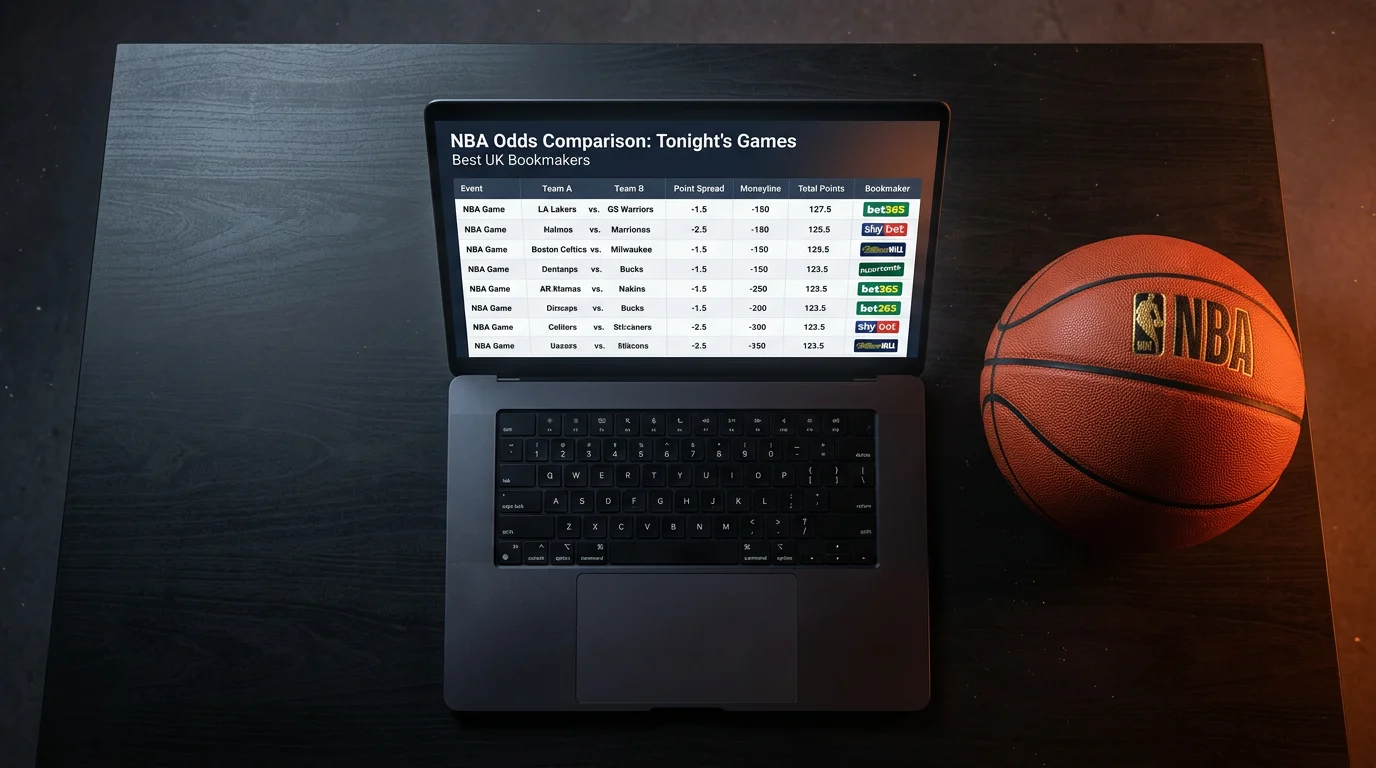
UK bookmakers vary significantly in prop depth. Some major operators offer only a handful of props on the headline game; others provide 20 or more lines across multiple players. For systematic prop betting, the depth of market available matters — a single platform with limited coverage forces you into the most efficient lines, reducing your ability to find the mispricings that make props worthwhile in the first place. It is also worth noting that mobile betting — which now accounts for 78% of all online sports wagers globally — makes player prop markets more accessible than ever, since you can monitor lines, injury reports, and late scratch news in real time from your phone in the hours before tip-off.
For a dedicated breakdown of how to research, time, and execute player prop bets on UK bookmakers — including how injury reports affect prop lines and the optimal window for placing bets — the NBA player props strategy guide covers the full process.
Parlays and Accumulators: When They Make Sense
UK punters love an accumulator. It is baked into the culture — the five-team acca, the weekend football coupon logic transferred to basketball. I understand the appeal completely; the potential return on a small stake is genuinely exciting. But I want to be honest about the mathematics before we get into the strategy.
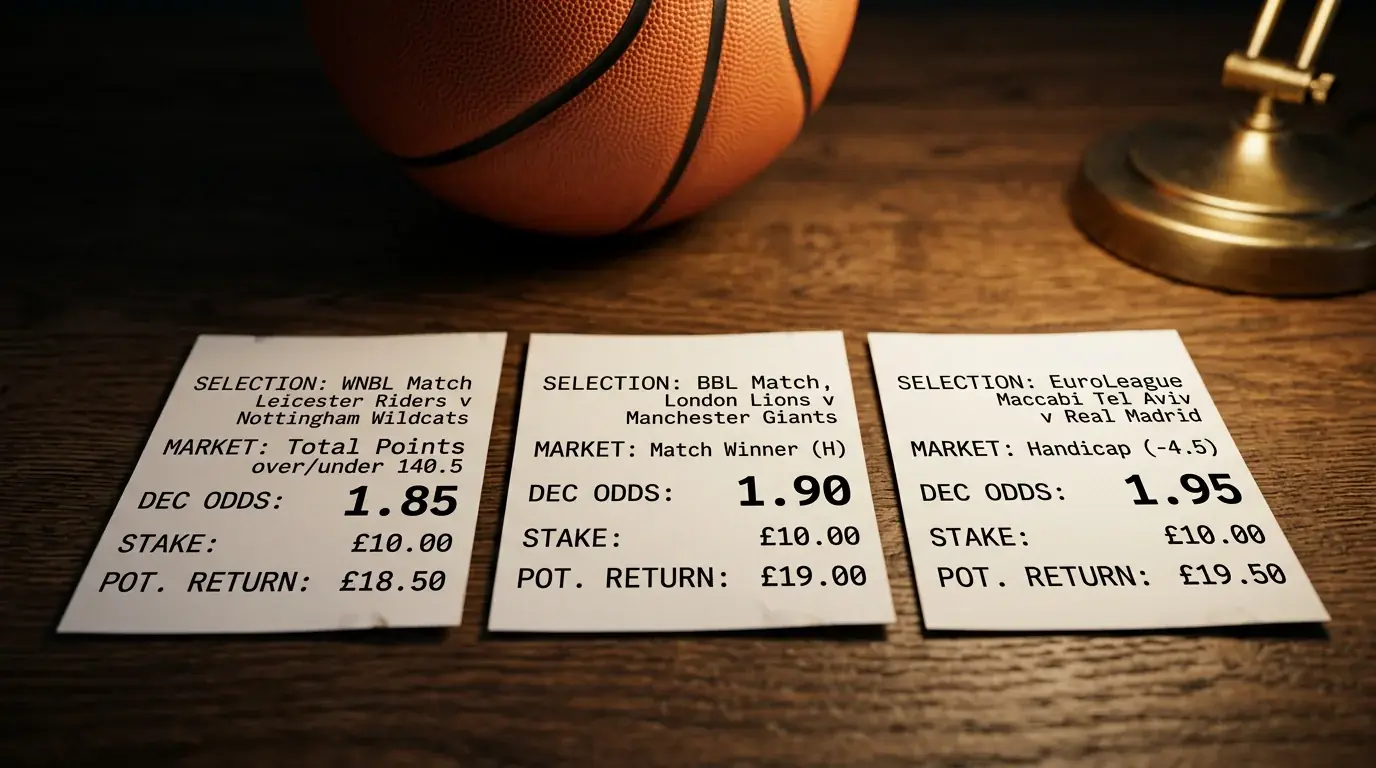
Every leg you add to an accumulator multiplies both the potential return and the variance. If each individual selection has a 55% win probability — a strong, consistent bettor’s standard — a three-leg acca has roughly a 16.6% chance of winning (0.55 cubed). That is not a problem in itself; the odds should reflect that probability. The problem is that bookmakers price accas using their margin on each individual leg, which means the margin compounds alongside the odds. A three-leg acca at an average 1.90 per leg yields 6.86 if all win, but the “true” odds at zero margin would be roughly 7.40 or higher. The gap is the house’s edge, stacked three times over.
So when does an accumulator actually make sense? The honest answer is almost never for profitability — but “profitability” is not the only valid reason to place a bet. If you are betting recreationally and want to maximise entertainment value from a small stake, a three-leg acca on a big NBA night is a perfectly rational choice. The expected value is negative, but so is a cinema ticket, and neither is a mistake if you understand what you are getting.
Where accumulators can have strategic merit is in the specific context of correlated legs. If two of your selections are positively correlated — for instance, betting the over on a game’s total and backing the high-scoring team to win outright — then the odds should reflect a higher probability than the product of the individual probabilities. Most UK bookmakers explicitly prohibit correlated parlays on the same game through their bet builder rules, which is precisely because those combinations can offer genuine value to the bettor. Within a standard acca across different games, true correlation is rare.
The acca bonuses offered by UK bookmakers — insurance on the last leg, boost on the total odds — are the main strategic lever available. These promotions genuinely change the expected value calculation for recreational accumulators, and some operators have more generous terms than others. If you are going to build accas, doing so with an eye on who is offering the best enhancement at a given moment is the closest thing to an edge available in this market.
For a full treatment of acca mathematics, correlation risks, and which UK bookmakers offer the most useful NBA accumulator promotions, the basketball accumulator tips guide goes into the detail that this overview cannot. For the broader discipline of how to size all your bets — accumulators and singles alike — in a way that survives variance, the basketball bankroll management guide is the place to start.
Futures and Outright Basketball Bets
Futures markets — betting on season-long outcomes like the NBA Championship winner, Conference winners, Most Valuable Player, and individual award races — operate on a different timescale than game betting and require a different mindset entirely. I think of futures as a portfolio rather than individual bets: you are not trying to pick the winner, you are trying to own the right probability distribution at the right price.
The Championship market, the most prominent futures market in basketball, is notoriously difficult to beat because bookmakers and the public both know the short list of realistic contenders. The top two or three teams at any given point in the season attract so much money that their odds compress well below true probability. The opportunity in Championship futures is almost always in the second tier — teams with a genuine path to the title but prices that reflect 8-12% implied probability when their actual shot is closer to 15-18%. These discrepancies tend to be largest in the preseason, before the public has formed strong opinions about the current season’s hierarchy.
Award markets — MVP, Defensive Player of the Year, Rookie of the Year — are often more inefficiently priced than team futures. The reasons are structural: public bettors pay less attention, the markets attract less overall volume, and bookmakers consequently invest less in the modelling. I have found genuine long-term value in MVP markets in particular, where narrative bias creates persistent overpricing on players from large-market teams relative to equally qualified players from smaller markets who attract less national media coverage.
One practical consideration for UK bettors in futures markets is liquidity and cash-out availability. If you take an early Championship position on a team at 8.00 in October and they are priced at 4.00 by January, many UK bookmakers offer cash-out at a price reflecting the current probability. This optionality has genuine value and should factor into your assessment of futures as a strategy — the ability to lock in a profit or reduce exposure mid-season is a meaningful advantage over the American model where most futures bets run to completion.
Basketball represents roughly 10% of global sports betting activity and continues to grow its share year-on-year, particularly in European markets. The growth in the UK specifically means bookmakers are expanding their futures coverage beyond the headline Championship market. EuroLeague outright markets, for instance, are now available at most major UK operators — a market that was genuinely underserved just three years ago and where I still find consistent pricing inefficiencies due to lower bookmaker attention relative to NBA markets.
The practical workflow I use for futures betting: I identify positions in October, allocate no more than 5% of my annual betting budget to them collectively, and revisit the portfolio at the trade deadline in February. At that point, the roster picture is clear, the injury landscape is established, and early-season outliers have typically regressed. Some positions I close for profit; some I let run; occasionally I add a second position on a team whose odds have drifted out after an injury but whose fundamental quality remains intact. Futures are a background discipline, not an active one — they reward patience and punish the urge to act.
Basketball Betting Markets: Your Questions Answered
What is the difference between moneyline and point spread in basketball?
The moneyline is a straight bet on which team wins the game, with odds reflecting the probability. The point spread adds a handicap — the favourite must win by more than the spread, the underdog can lose by less than the spread. Moneyline odds are straightforward; spread odds are typically even money (around 1.90) because the handicap is designed to make the bet a genuine 50-50 proposition.
How are NBA player prop lines set by UK bookmakers?
Prop lines are typically set using a combination of season-long averages, recent form (usually the last five to ten games), and matchup data. Bookmakers adjust for home or away splits, pace of the opposing team, and any known defensive assignments. The lines are generally less refined than game lines because of the sheer volume of props priced on any given NBA slate — which is why they represent the most exploitable market for well-researched bettors.
Are basketball accumulators worth it compared to single bets?
For profitability, single bets at positive expected value outperform accumulators in the long run because margins compound with every added leg. For entertainment value, accumulators are a valid choice if the stake represents money you are happy to lose in exchange for an exciting potential return. Acca bonuses from UK bookmakers partially offset the mathematical disadvantage but rarely eliminate it entirely.
Which basketball futures markets offer the best value in the UK?
Award markets — particularly MVP and Defensive Player of the Year — tend to be priced with less rigour than Championship futures, creating more frequent mispricings. Second-tier Championship contenders in the preseason and early regular season often carry longer odds than their true probability warrants. EuroLeague outright markets are generally softer than NBA futures due to lower bookmaker attention and public engagement.
Written by the editors at Basketball Betting Strategies.